
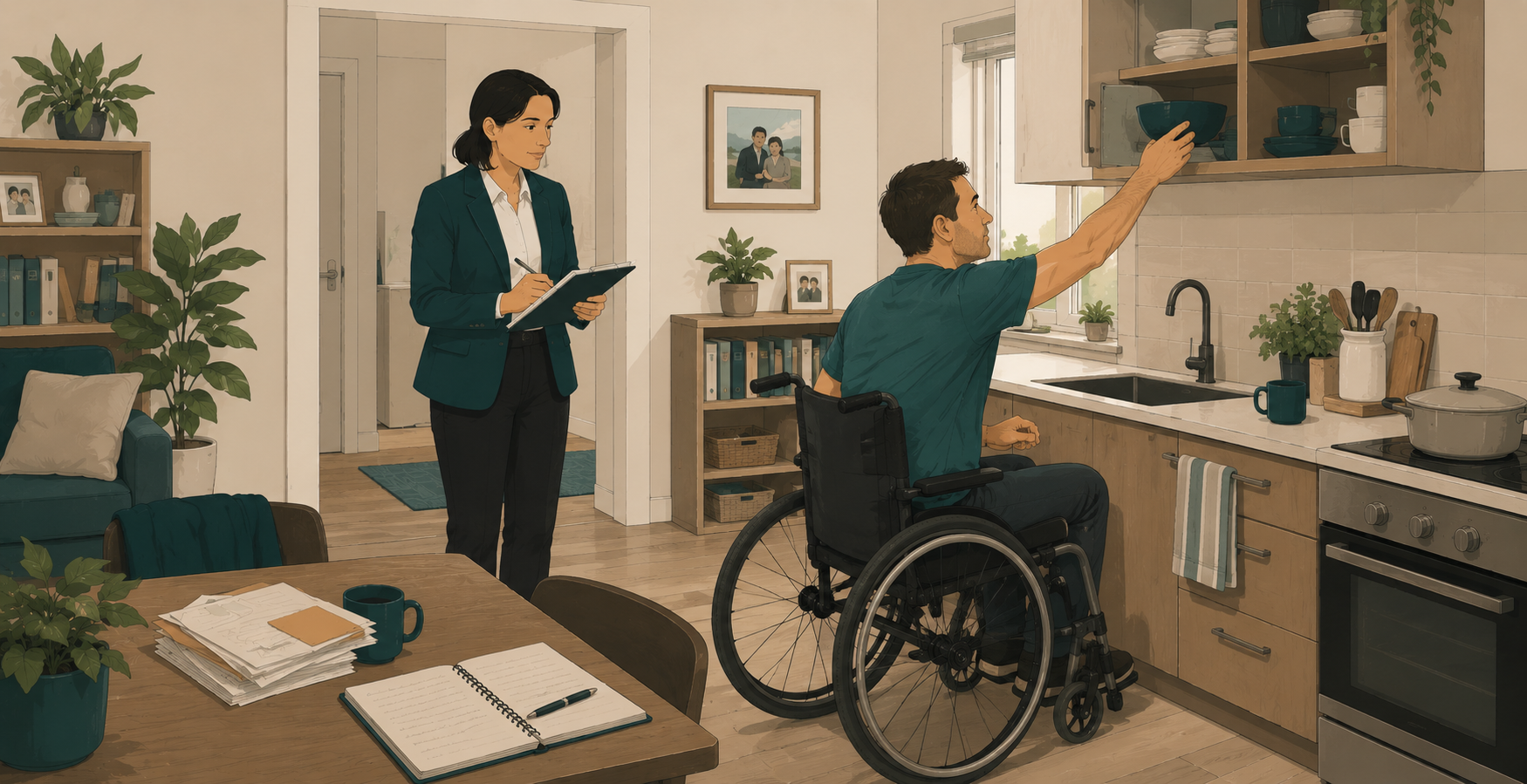
Occupational Therapy Assessments for Spinal Cord Injury
Spinal cord injury (SCI) is among the most complex and consequential presentations encountered in medico-legal occupational therapy. The impact is often immediate and significant, affecting mobility, independence, daily activities, and long-term support requirements.
Interface provides occupational therapy assessments for complete and incomplete spinal cord injuries at all levels. We have experience assessing SCI arising from motor vehicle accidents, workplace incidents, sporting injuries, and medical negligence. Our assessments address both current function and future care needs, providing the detailed analysis these complex matters require.

Complete and Incomplete Spinal Cord Injury
Complete SCI
Complete spinal cord injury results in the loss of motor and sensory function below the level of injury. The functional impact varies significantly depending on the level of injury. Cervical injuries affecting all four limbs often present very differently from thoracic or lumbar injuries affecting the lower limbs and trunk. Our assessments address the full scope of functional impact, including personal care, mobility, equipment requirements, home modifications, care hours, and long-term support needs.Incomplete SCI
Incomplete spinal cord injury involves some preservation of motor or sensory function below the injury level. These presentations are often more variable, with recovery potential and long-term outcomes requiring careful clinical assessment. Interface assessors consider the degree of preserved function, rehabilitation progress, and likely future trajectory when forming opinions regarding care, support, and future needs.What Does an OT Assess in a Spinal Cord Injury Matter?
Personal Care
We assess the level of assistance required for daily self-care activities, including:- Showering and grooming
- Dressing
- Bladder and bowel management
- Skin care and pressure management
- Positioning and transfers
Transfers and Mobility
Assessment includes wheelchair use, transfers between surfaces, community mobility, and vehicle access. Where equipment is required, recommendations are specific, clinically justified, and supported by detailed costings.Domestic Function
We assess a person's ability to manage:- Meal preparation
- Household tasks
- Home management activities
- Property maintenance requirements
Home and Vehicle Modifications
Spinal cord injury often requires environmental modifications to support safe and independent function. Assessments may address:- Bathroom and wet-area modifications
- Access and doorway requirements
- Kitchen adaptations
- Vehicle modifications
- Environmental accessibility needs
Equipment Requirements
Recommendations may include:- Manual and powered wheelchairs
- Pressure management systems
- Standing frames
- Communication technology
- Environmental control systems
- Other specialised equipment
Care and Support Needs
We assess past, present, and future care requirements. In more severe presentations, this may include 24-hour care arrangements involving both hands-on assistance and supervision.Lifetime Cost of Care
Where lifetime care planning is required, we provide detailed projections across care, equipment, and support domains, taking into account expected life expectancy, equipment replacement schedules, and future care requirements.LTCS and NIISQ Matters
The Lifetime Care and Support Scheme (LTCS) in New South Wales and the National Injury Insurance Scheme Queensland (NIISQ) provide treatment, rehabilitation, and care for people who sustain catastrophic injuries, including spinal cord injury. Interface has experience assessing participants within both schemes and addressing disputes relating to care and support needs. These assessments are conducted with the depth and clinical detail required for lifetime care decision-making.Care of Others
Where a person with spinal cord injury provided care to children or other dependants before their injury, an assessment may address the cost of replacing that care. This recognised head of damage can be significant, particularly where dependent children are young or where the injured person previously provided substantial caregiving responsibilities.How to Make a Referral
To arrange a spinal cord injury assessment, please provide:- A referral letter outlining the specific questions to be addressed, including whether lifetime care planning is required
- All available medical, surgical, rehabilitation, and allied health records
- Any previous OT assessments or care plans
- LTCS or NIISQ documentation where applicable
- Any urgency requirements
Frequently Asked Questions
Does Interface conduct assessments for LTCS and NIISQ participants?
Yes. Interface provides comprehensive occupational therapy assessments for participants in both the Lifetime Care and Support Scheme (LTCS) and the National Injury Insurance Scheme Queensland (NIISQ). These assessments address current and future care needs, equipment requirements, and long-term support planning.How does Interface cost equipment for spinal cord injury reports?
Equipment recommendations are specific and evidence-based. We identify the recommended item, current supplier cost, expected lifespan, and replacement schedule. Where a higher-cost option is recommended, the clinical rationale is clearly explained. Interface has no financial relationships with equipment suppliers.Can Interface provide updated reports as a person's condition changes?
Yes. Functional status can change over time, particularly following rehabilitation or changes in health. We can provide supplementary or updated assessments where the clinical picture has evolved.Author
